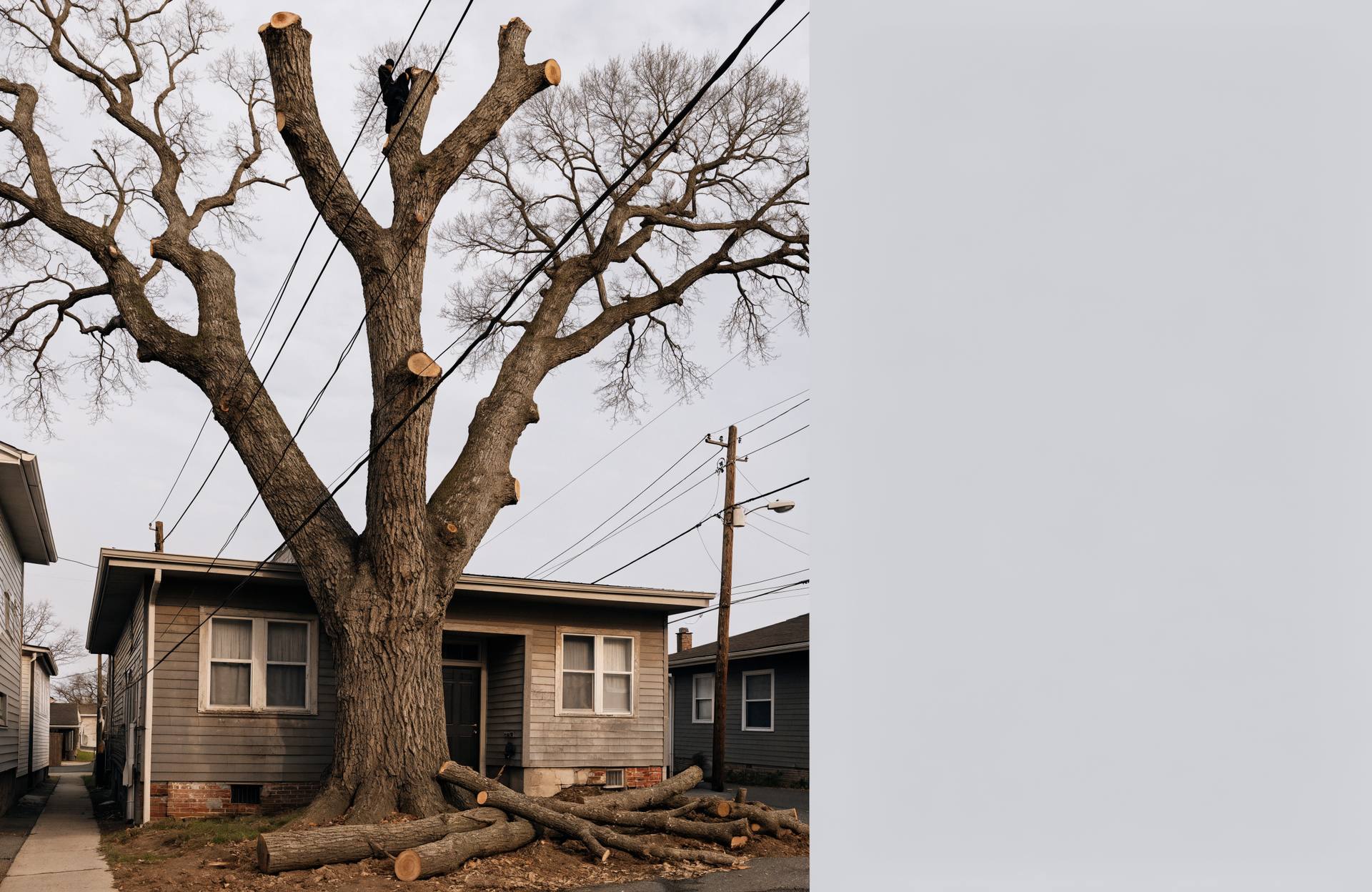
Signs a Tree Needs to Come Down in Coastal Georgia
A full canopy is not proof of a sound trunk. Here is what to look at instead.
The short version
- Check the base first. It tells you more than the canopy does.
- Mushroom conks on the trunk or root flare are a serious sign.
- Soil heaving or cracking on the side opposite a lean is urgent.
- Not every ugly tree is dangerous, and not every green one is safe.
The single most common thing we hear on a call-out is that the tree looked completely fine. Often it did. A tree can carry a full head of green leaves on a trunk with very little sound wood left holding it up, because the living tissue that moves water sits just under the bark and the structural strength sits in the middle.
Start at the bottom
Most homeowners look up at the canopy. Look at the base instead:
- Mushroom conks or bracket fungi growing out of the trunk or the root flare. Fungi are decomposers. Their fruiting bodies mean the decay inside is already well established.
- Soft or punky wood near a root flare. If a screwdriver pushes in easily where it should be solid, that is not good news.
- A hollow sound when the trunk is tapped, particularly if it changes as you move around the tree.
- Bark falling away in plates with nothing regrowing underneath.
- Carpenter ant traffic in and out of the trunk. Ants do not cause the decay, but they move into wood that is already soft.
The lean that matters
Plenty of trees lean and have leaned for decades. A lean is only alarming when it is new or when the ground is moving with it. What to look for is fresh soil heaving, or a crack opening in the ground, on the side opposite the direction of the lean. That is the root plate lifting, and once it has begun it does not settle back.
This matters more here than in most of the country because of our soil and water table. We wrote about that in why saturated soil puts Chatham County pines on the ground.
Canopy signs worth acting on
- Dieback starting at the top. Trees generally fail from the top down when they are in decline, so bare upper branches with a green lower canopy is a worse sign than the reverse.
- A split or crack running down into a main union. Two trunks joined in a tight V with bark trapped between them is a classic failure point.
- Large deadwood held in the canopy. Dead limbs are what actually fall on cars and people, and they are the highest value thing to have removed.
- Hangers, broken limbs resting in the canopy after a storm. They are held by friction and can come down with no wind at all.
The species that catch people out here
Water oaks and laurel oaks are the story of tree failure in older neighbourhoods across Chatham County. Both were planted heavily because they grow fast and shade a yard quickly. Neither is long lived, and both are notorious for hollowing from the inside while looking healthy. Because a whole street was often planted in the same decade, they also tend to reach that stage together, which is why it can feel like every oak on the block is going at once.
Sweetgum behaves similarly. Live oaks, by contrast, are long lived and worth real effort to keep, which is one reason they are protected under local tree ordinances.
Damage you cannot see yet
Trenching inside the root zone for a pool, a driveway, an addition, or a utility line will kill a mature tree, but it can take two or three growing seasons to show. If work was done near a big tree a couple of years ago and the canopy is now thinning, the two are probably connected. By the time it is visible the decision has usually already been made for you.
What does not mean the tree must go
Plenty of things look alarming and are not. Surface roots are normal. Some deadwood in a mature oak is normal. Leaf spot and other cosmetic foliage problems are usually not structural. Limbs over the roof are a clearance issue that trimming solves for a fraction of the price of removal.
The honest answer is that some of these need someone to put eyes and hands on the tree. If you are unsure, that is exactly what a free on-site estimate is for, and we would rather tell you a tree can be kept than sell you a removal you did not need.
Get a Free Estimate in Pooler
Send a photo of the tree and what is around it. Licensed, insured, and the debris leaves with us.
Call or text anytime. If we miss you, we’ll call you right back.