Tree removal
The job that creates the stump. Grinding on the same visit is the cheapest time to deal with it.
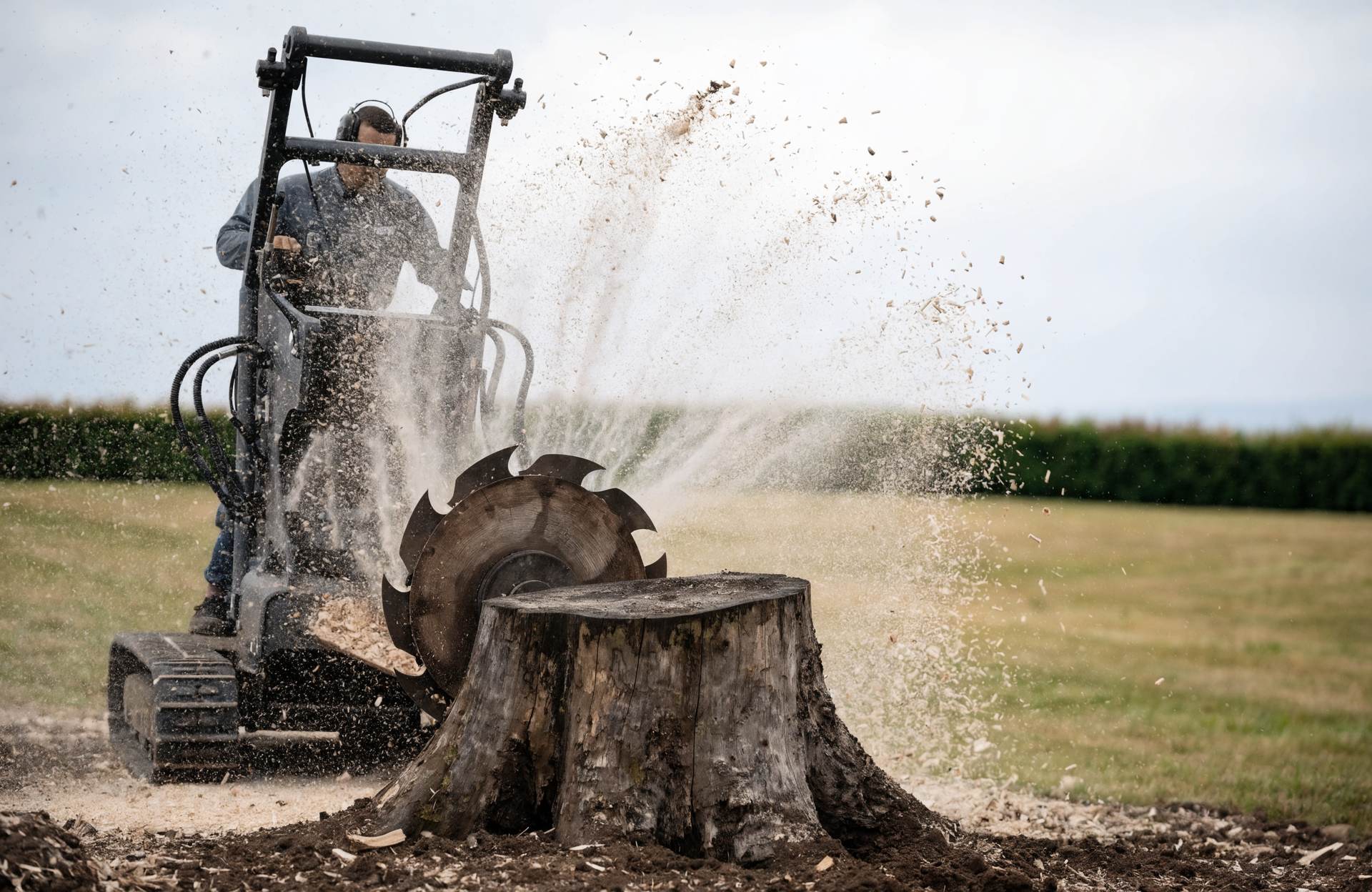
Ground below grade so you can sod, replant, or just mow over it. Surface roots included, utility locate arranged, and the grindings left or hauled off, whichever you want.
Call or text anytime. If we miss you, we’ll call you right back.
Measure the stump across the widest point at ground level and tell us that number.
A removal leaves the stump and the root ball behind. Grinding is what turns that back into usable yard. We cut the stump down below grade with a purpose-built machine, take out the surface roots running off it, and leave you a spot you can sod, replant, or mow straight over. Most of our grinding happens on the same visit as a tree removal in Pooler, which is the cheapest time to do it, but we also grind stumps somebody else left behind.
These get used interchangeably and they are different jobs. Grinding uses a cutting wheel to chew the stump into chips, working from the top down and the outside in. Nothing gets dug up, the surrounding lawn stays largely intact, and you are left with a hole full of grindings. Full stump removal means excavating the root ball out of the ground with a machine, which leaves a crater, tears up a lot more yard, and costs considerably more.
For almost every residential situation in Pooler, grinding is the right answer. The exception is when something structural is going in over the spot, a foundation, a pool shell, or a driveway, where a contractor may need the root mass gone entirely. Tell us what is going in afterward and we will tell you which one you actually need.
Standard depth is roughly four to eight inches below grade, which is enough to get sod down or run a mower without hitting anything. If you intend to plant a new tree in the same spot we go deeper, because roots and grindings in the planting hole will rob nitrogen from a young tree as they break down. Depth is limited by what is in the ground, and on the coastal plain the water table is high enough that a deep grind can hit wet sand.
Width matters as much as depth and is the part people forget. Live oaks, water oaks, and sweetgums throw surface roots that radiate well past the trunk, and a stump ground flush while those roots are left in place still leaves ridges through your lawn. We grind the root flare and the runners out to where they drop below the surface, and we quote that as part of the job rather than as a surprise afterward.
Grinding is digging as far as the law is concerned, and it happens in exactly the depth band where irrigation lines, low voltage lighting, invisible fence wire, and shallow cable and gas services run. Georgia requires a locate before that kind of work, it is free, and we arrange it. What the state locate does not cover is anything private you installed yourself past the meter, so if you put in sprinklers, landscape lighting, or a dog fence, tell us where the lines run before the machine starts.
One stump produces a surprising volume of chips, usually a mound noticeably bigger than the stump looked, because grindings come out aerated. You have two options and neither is wrong. Leave them, and we rake the pile back into the hole and crown it slightly, since it will settle over the following months. Or we haul them off and backfill with topsoil, which is what you want if you are laying sod or the spot sits somewhere visible. Hauling is priced separately because it is real volume and real weight.
Grindings are not the same as mulch. They are a mix of wood and soil, they are usually too coarse for beds, and fresh ones will pull nitrogen out of anything planted directly into them. They compost down fine if you have a back corner to put them in.
If the tree came down in a storm and left a lifted root plate rather than a clean stump, that is a different job. See storm damage cleanup for what is involved in getting that back to level ground.
The job that creates the stump. Grinding on the same visit is the cheapest time to deal with it.
Trees already down on a structure or a drive. Storm work takes priority over scheduled jobs.
Uprooted trees leave a lifted root plate and a crater rather than a clean stump. Different job, different approach.
Sometimes the tree does not need to go at all. Clearing limbs off the roof can keep a healthy tree standing.
Grinding chews the stump into chips with a cutting wheel and leaves the deeper root system in the ground to decay on its own. Removal means excavating the whole root ball out, which leaves a large crater, disturbs far more of the yard, and costs considerably more. Grinding is the right call for almost any residential situation. Full removal is worth it mainly when something structural is going in over the spot.
Usually four to eight inches below grade, which is enough for sod or for mowing over it without contact. We go deeper when you plan to plant a new tree in the same spot, because leftover roots and grindings will compete with a young tree as they break down. On the coastal plain the water table limits how deep is practical, since a deep grind can reach wet sand.
Your choice. We can rake them back into the hole and crown the pile slightly, since it settles over the following months, or we can haul them off and backfill with topsoil. Hauling is priced separately because it is genuine volume and weight. Grindings are not mulch. They are a coarse mix of wood and soil and fresh ones will pull nitrogen from anything planted directly into them.
Yes, if the grind goes deep enough and the grindings come out rather than going back in the hole. Backfill with topsoil instead. Planting straight into a bed of fresh grindings is the most common reason a replacement tree struggles, because the decomposing wood ties up nitrogen right where the new roots need it. Tell us you intend to replant when we quote it and we will grind accordingly.
Yes. Grinding counts as digging, and it works in the same shallow band where irrigation, low voltage lighting, invisible fence wire, and shallow cable and gas runs live. Georgia requires a locate before that work, it costs nothing, and we arrange it. The state locate does not cover private lines you installed past the meter, so tell us where your sprinklers, landscape lighting, or dog fence run.
Send a photo and the width across the stump at ground level. Licensed, insured, and the grindings go wherever you want them.
Call or text anytime. If we miss you, we’ll call you right back.